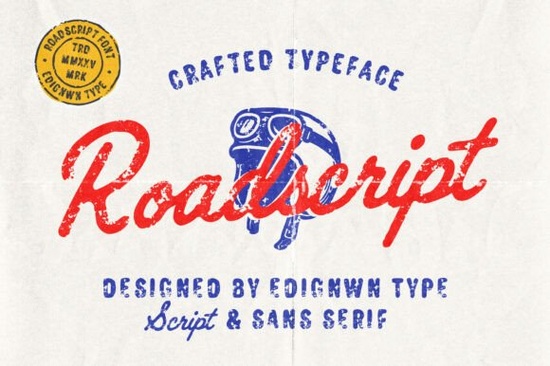
If you’re building a brand around vintage cars, motorcycle shops, or anything with a garage-meets-greaser vibe, Roadscript Font might be exactly what your toolkit needs. This retro automotive font duo brings back the hand-lettered feel of old workshop signs, mechanic patches, and fuel badges but in a clean, ready-to-use digital format. It’s built for designers who want authentic nostalgia without sacrificing modern readability.
What makes Roadscript Font different from other retro fonts?
Most retro fonts either look too polished (losing that handmade charm) or too messy (hard to read). Roadscript strikes a smart balance. The connected script feels like someone drew it with a loaded brush on a greasy workbench, while the all-caps companion adds a sturdy block presence for titles and badges. Together they form a system that feels naturally aged, not artificially distressed.
Think of it this way: Roadscript handles the flowing, organic text perfect for a logo or a tagline while Roadscript Caps steps in for bold headlines, patch designs, or anyplace you need weight without losing personality. The duo is designed to pair seamlessly, so you don’t have to hunt for a second font that matches.
How do you pair Roadscript and Roadscript Caps effectively?
Using both typefaces together is straightforward once you understand their roles. Here’s a simple approach that many visual branding designers use:
- Roadscript (connected script) – Use for the main name or primary text in a logo, poster title, or apparel graphic. Its smooth strokes give a handcrafted, personal feel.
- Roadscript Caps (bold all-caps) – Use for secondary text like “Est. 1975,” “Garage,” or “Auto Parts.” The blocky letters anchor the design and add contrast.
- Layering tip: Place the script on top or center, with the caps below or as a border. Keep the caps slightly smaller in point size so they support rather than compete.
If you’re designing a patch, try Roadscript Caps as the outer ring and Roadscript (smaller, curved) inside. This layout mimics classic mechanic patches and club badges.
Can I use this font for print-on-demand or small business branding?
Absolutely. In fact, that’s one of its strongest use cases. Print-on-demand sellers on Etsy, Redbubble, or Printful will appreciate how the font scales for t-shirts, hoodies, mugs, and stickers. The connected script handles well on fabric because the letters stay together without awkward gaps. For garage-style posters or wall art, the duo gives you that worn-in look without needing Illustrator brushes or Photoshop textures.
Small businesses especially auto shops, bike repair studios, barber shops, or food trucks with a vintage theme can use Roadscript for menus, signage, and social media graphics. Just remember to buy the proper license for commercial use through Creative Fabrica.
Where does Roadscript Font work best?
The font shines in projects where a nostalgic, handcrafted aesthetic is the goal. Some real-world examples:
- Logos for custom car builders, motorcycle clubs, or hot rod shops
- Apparel graphics – t-shirts, caps, patches, and pins
- Posters for car shows, races, or vintage-themed events
- Packaging for artisan oil cans, tools, or automotive merch
- Social media overlays and YouTube thumbnails for gearhead content
The font also pairs well with other display styles. For instance, you can combine Roadscript with a distressed bold sans for extra texture, or layer it over a chunky font style for a playful contrast. If you need a completely different hand-drawn lettering vibe for another project, Hoopsy offers a bouncy alternative. For a more refined bold display fonts pair, Senior keeps things clean while still feeling retro. And if you’re after a grunge effect without losing legibility, check out vintage logo design options like Dust Stamp.
Is Roadscript Font easy to read at small sizes?
Retro scripts can get muddy when reduced, but Roadscript keeps its clarity thanks to generous spacing and consistent stroke weight. At small sizes (like a patch or a business card), the script remains legible, though you’ll want to avoid going below 10–12 points. Roadscript Caps, being all-caps and bold, stays crisp even on tiny stickers or web buttons. For best results, test your design at the final output size before printing.
Practical checklist for using Roadscript Font
- Define the role – Decide which element uses the script and which uses the caps. Don’t mix both for the same line of text.
- Check spacing – Adjust kerning, especially in the caps version, to avoid gaps that break the vintage illusion.
- Add subtle texture – Overlay a light paper or grain texture in your design software to enhance the worn feel.
- Test on mockups – Place the font on a t-shirt or sign mockup before committing to production.
- Buy a commercial license – If you’re selling products with the font, ensure you have the right license from Creative Fabrica.
Roadscript Font is a solid choice for anyone working on retro automotive branding or print-on-demand projects. Its dual nature gives you flexibility, and the handcrafted warmth connects with an audience that values authenticity. Try it on a garage logo or a mechanic’s apron design you’ll likely see what makes this duo stand out.
Explore Design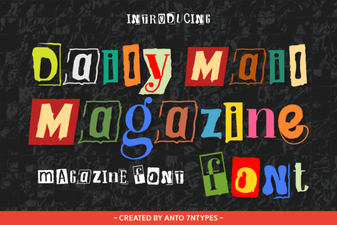 Font Inspiration From the Daily Mail Magazine
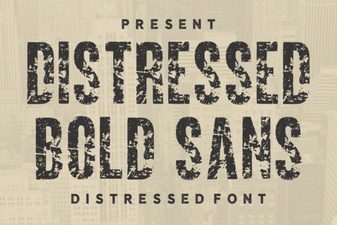 Bold Distressed Fonts for Modern Design Projects
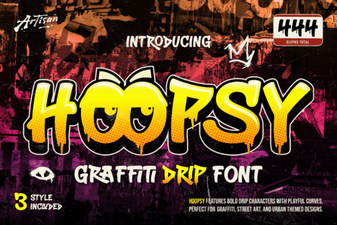 Hoopsy Font: a Designer's Playful Typography Toolkit
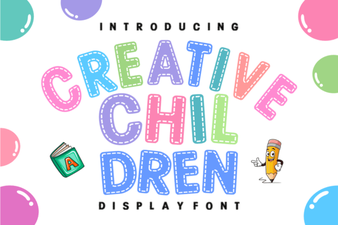 Fun, Playful Fonts for Kids' Creative Projects
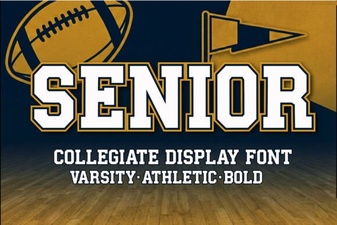 Senior Fonts: Project Design Inspiration
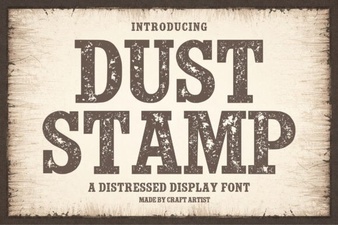 Dust Stamp Fonts for Creative Diy Projects